
NCTransform® Capability
Adaptive Blending
Surface-Accurate Material Removal
Blending is one of the most algorithmically complex operations in adaptive machining, but with NCTransform, your engineers can set up a blending program in hours, not weeks. NCT measures the actual surface, builds the topology, and adapts the toolpath automatically. Your team gets seamless, accurate blends without writing a single line of custom code.
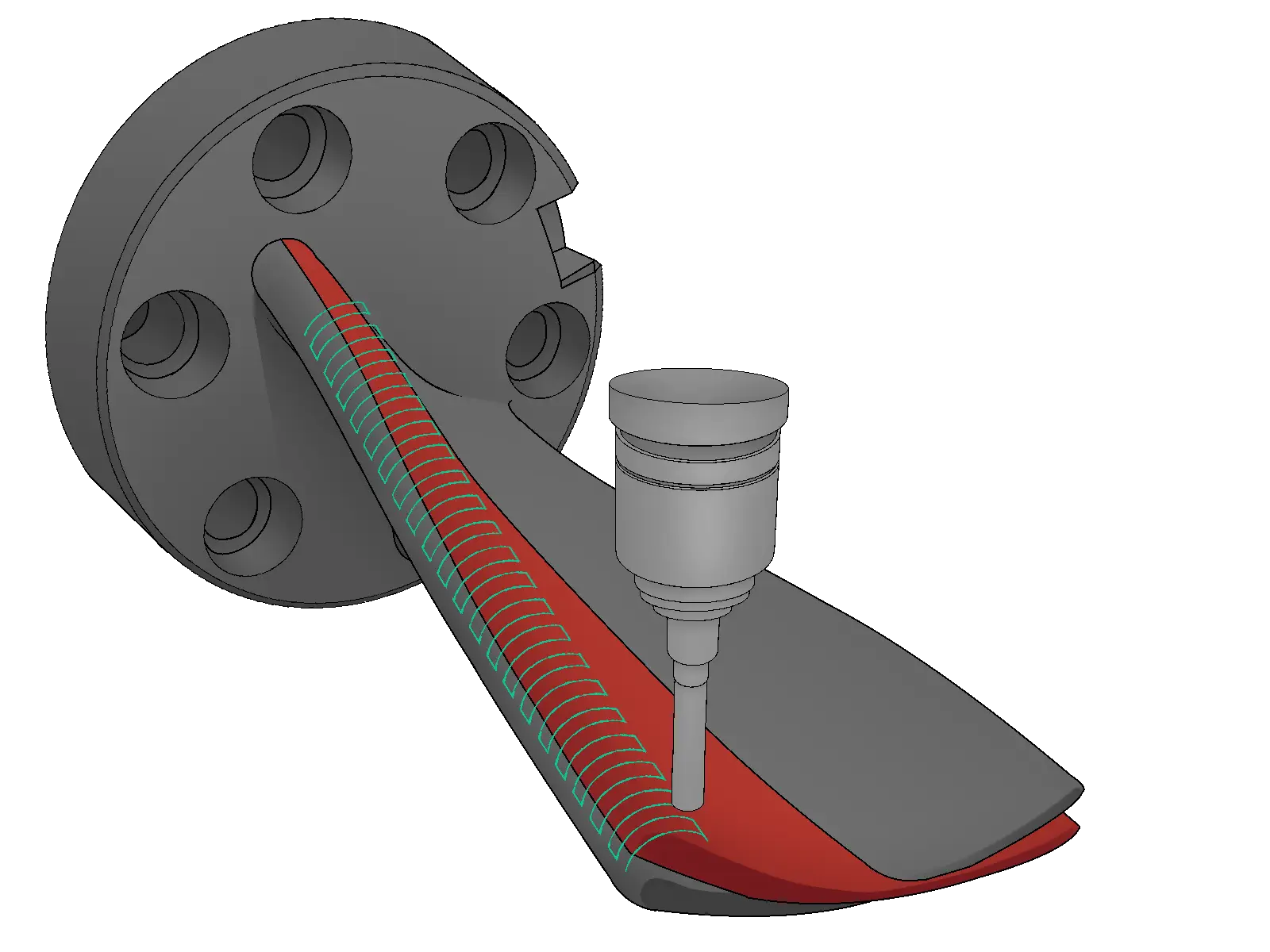
Live surface mapping: nominal vs. actual grid on turbine airfoil
8 Times Faster
Faster than hand blending: airfoil repairs your team once spent all day on done in under an hour
Any surface
Turbine airfoils, cast surfaces, weld repairs, duct transitions. If a probe can map it, your team can blend it
Hours to setup
Complex algorithms made easy. Most engineers have a blending program running same day
Repeatable
Consistent results every part, not dependent on who's at the machine that day
MRO spotlight: turbine blade repair
From 8 hours of hand blending to under one hour.
Your team knows exactly where to blend because NCT measured it.
In a traditional MRO workflow, your operators manually grind and hand-blend the repaired area, working by feel to match the surrounding airfoil profile. The process is slow, skill-dependent, and inconsistent part to part.
With NCTransform, your team maps a grid of points across the repair zone and the surrounding blade surface, building a precise topology of what’s actually there. The blend toolpath adapts to that real surface, transitioning smoothly from the reworked area into the original airfoil geometry with no step, no hand finishing required.
The result: an aerodynamically correct surface that meets print every time, produced in a fraction of the manual labor hours and your team set up the program themselves.
8 times faster
Repair cycle
Less cost
Reduced labor hours per blade
More capacity
Take on more blades without adding headcount
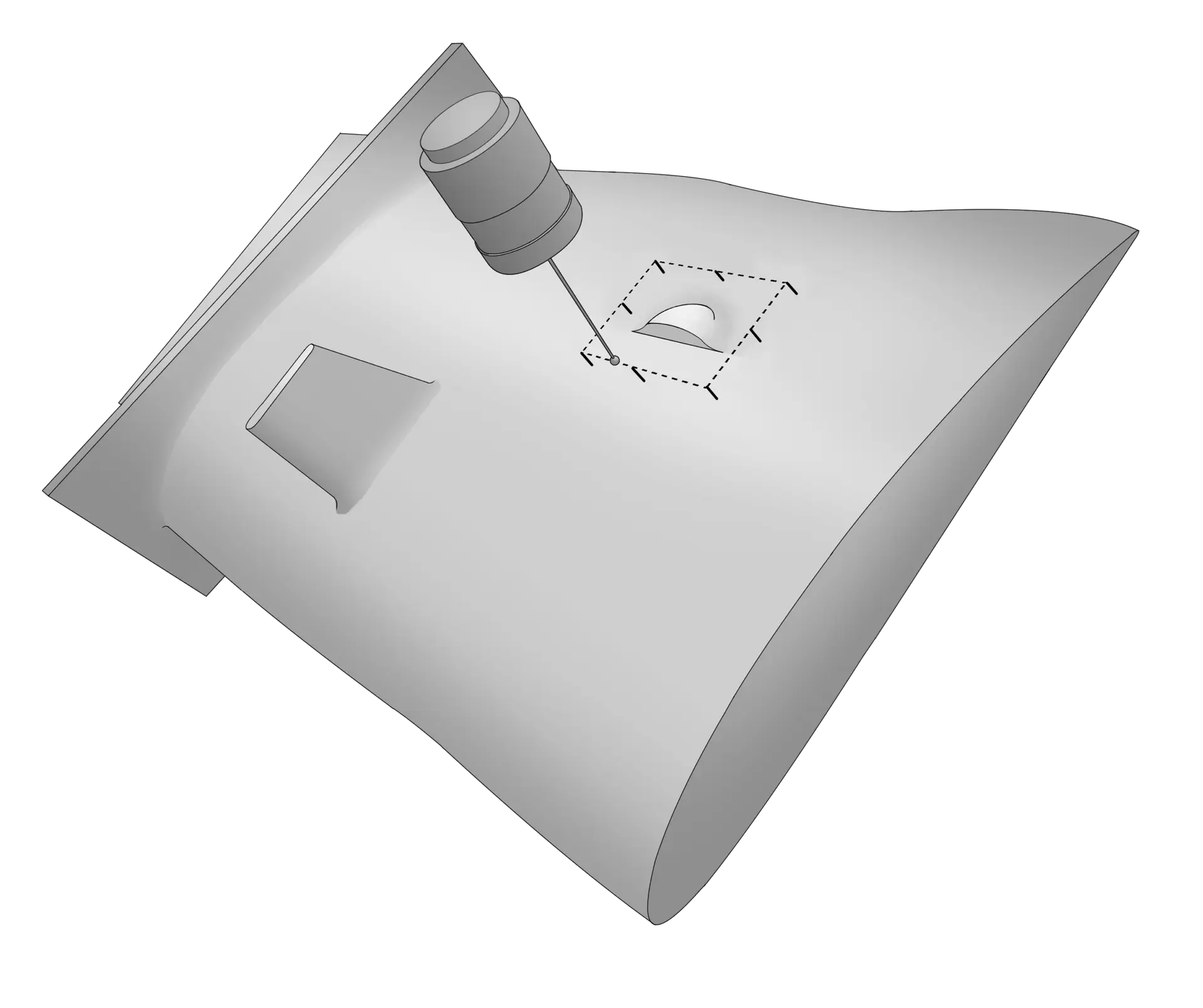
MRO: turbine blade leading edge
See it in action
Turbine blade leading edge blend: live
How blending works
Measure. Map. Morph. Blend.
01 — Measure
Map the actual surface
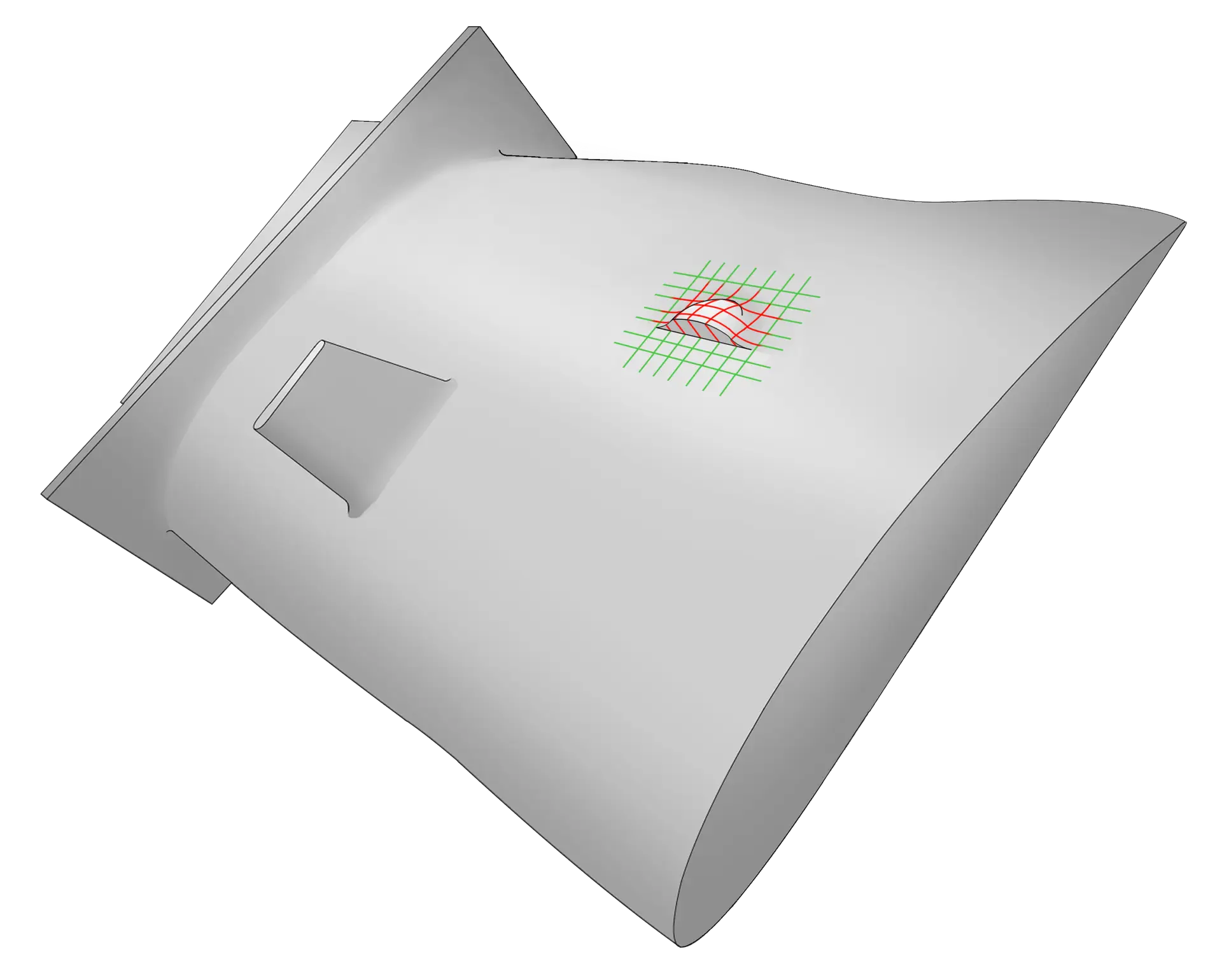
02 — Map
Build the actual surface model
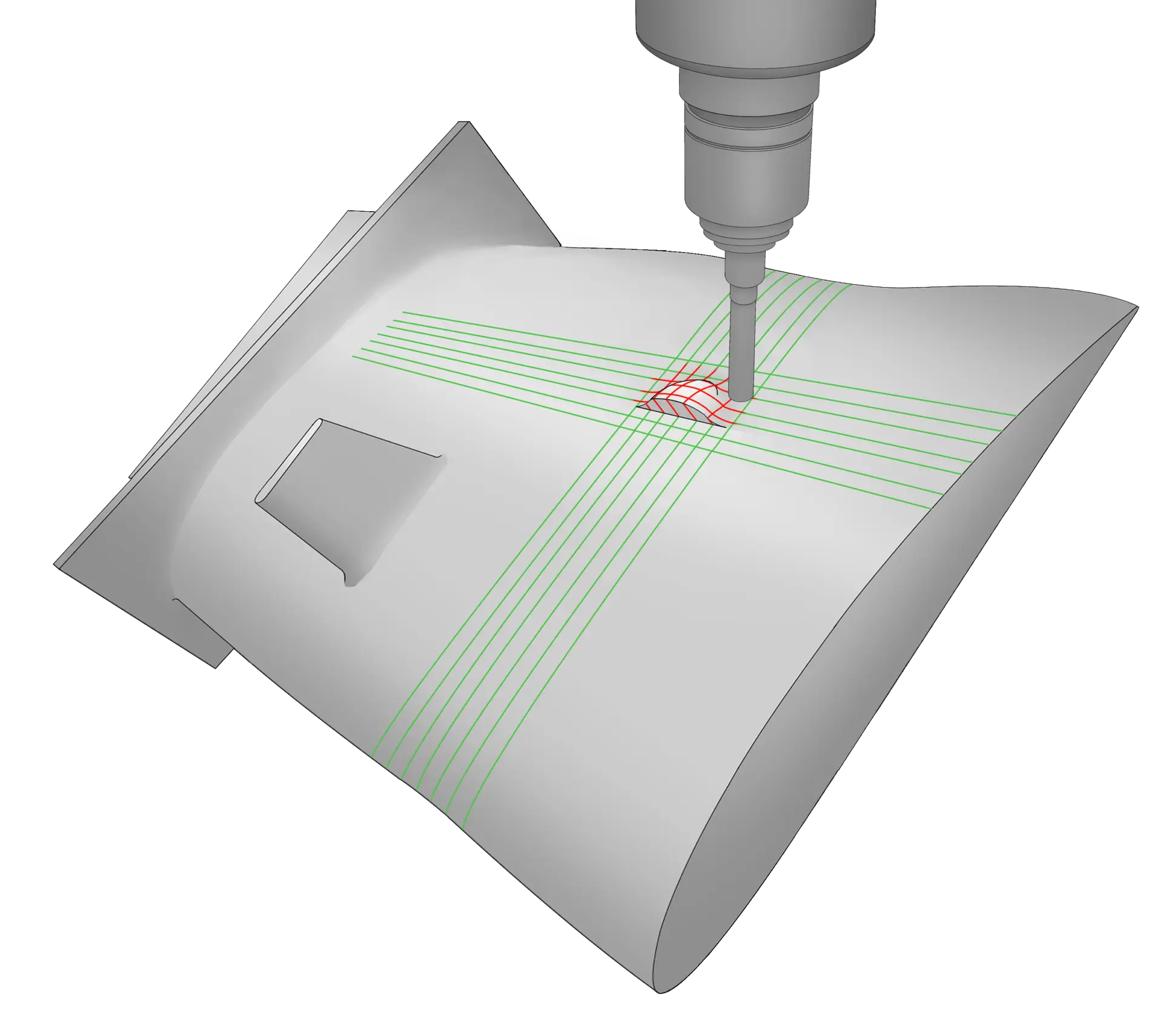
03 — Blend
Toolpath adapts to the real surface
Surface measurement methods
Three ways your team can map the surface.
Single touch probing
The standard approach. Your team's existing touch probe measures discrete points across the surface to build the topology grid.
Drag probing (Renishaw SPRINT)
High-speed scanning that sweeps continuously across the surface, capturing far more data points in the same time, ideal for complex curved geometries.
Light scanning
Non-contact optical scanning for surfaces where touch probing isn't suitable, delivering dense, high-resolution topology data without risk of surface damage.
01
Your engineer defines the blend zone once
02
NCT maps the actual surface. Your choice of method
03
The blend toolpath is computed automatically
04
Cut, then verify before the part leaves
Blending applications
Where your team can put blending to work.
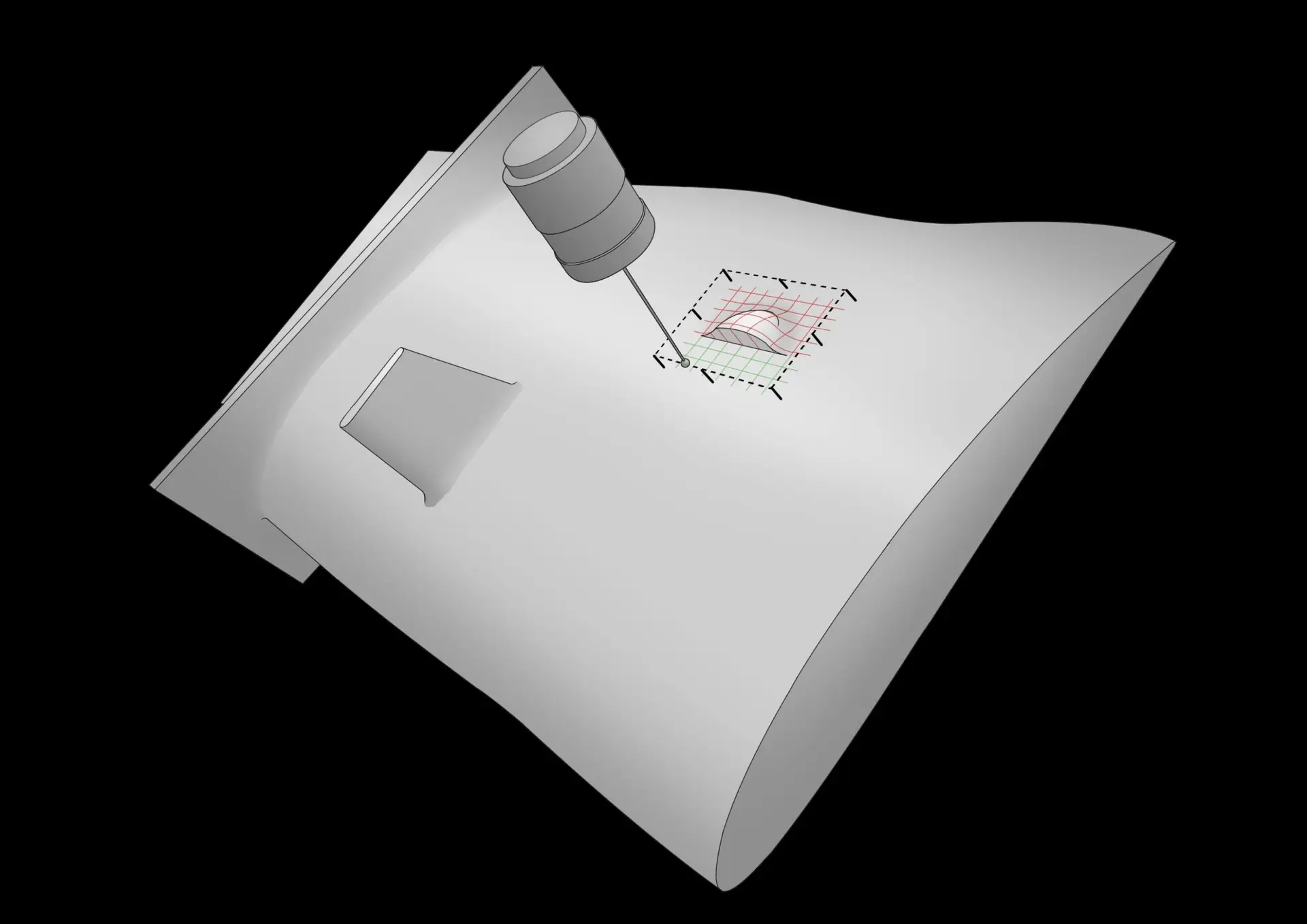
Casting gate removal
New parts: investment and sand castings
Your team can eliminate the hand-grinding step entirely. NCT measures the actual casting surface around each gate location and morphs the removal toolpath to blend flush with the real surface, handling part-to-part variation in gate position and residual stub height automatically.
No more inconsistent grind marks, no more operator skill dependence. The same quality result on every casting, every shift.
Gate stubs
Riser removal
Parting line cleanup
Flash removal
Aerospace castings
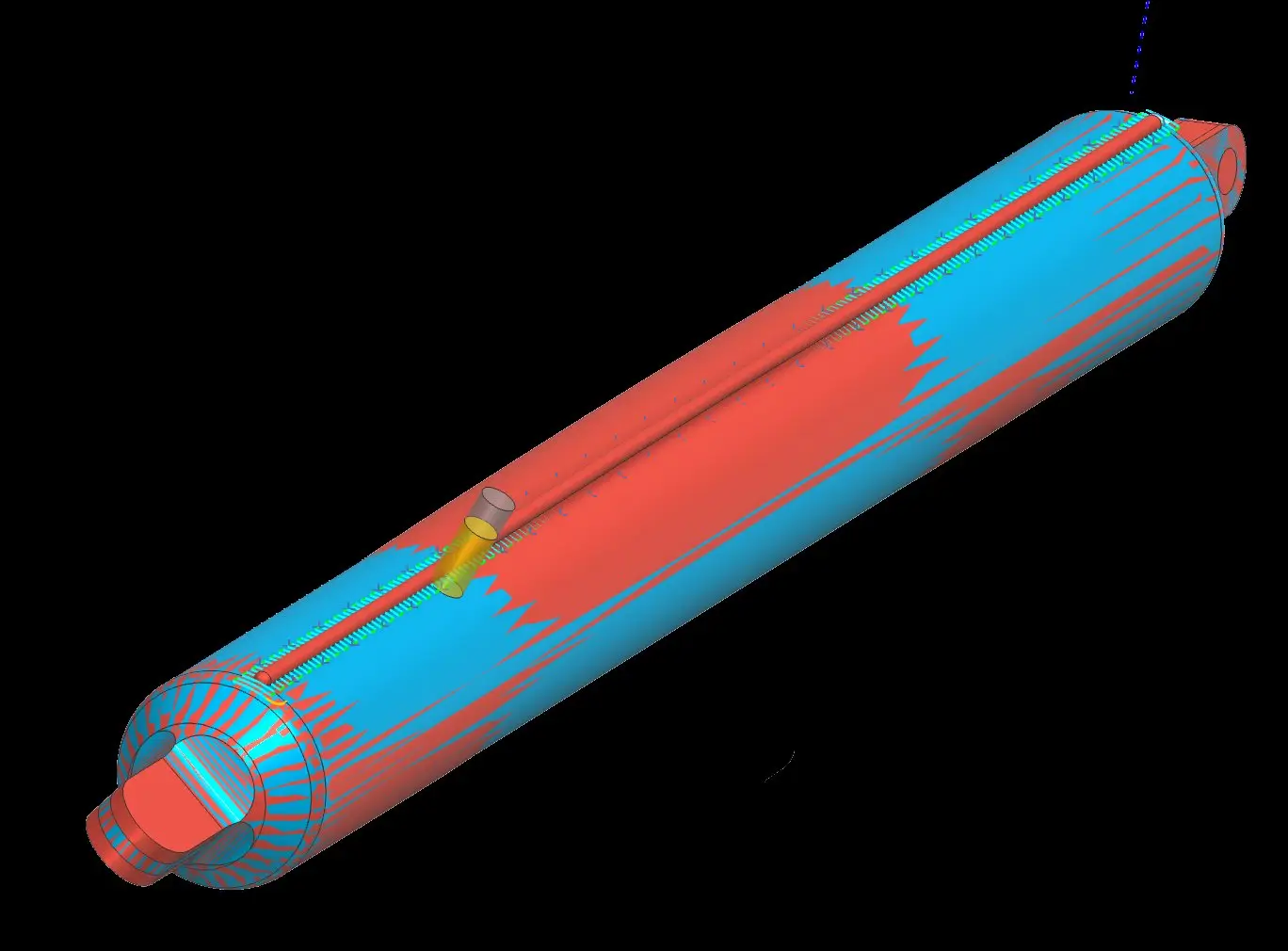
Weld repair blending
Repair & overhaul. All weld types
Weld height, width, and position all vary, making nominal-based toolpaths unreliable. Your team can measure the actual weld bead geometry and surrounding surface, generating a blend toolpath that removes the crown and transitions smoothly into the parent material every time.
Works on flat, curved, and complex surface geometries. Seamless weld repairs with no witness marks, no undercut, no rework.
TIG weld blending
Weld bead removal
Repair patches
Structural weld cleanup
Aero surface repair
Welded tip & leading edge blending
New material addition on airfoils
Your team can restore worn or damaged blade tips and leading edges by welding on new material, then blending the added section back to the original airfoil profile. The transition between new and parent material must be aerodynamically correct. NCT ensures it is.
NCT measures the actual profile of the welded tip and the surrounding blade surface, morphing the toolpath to create a smooth, continuous transition matched to the real curvature at every point.
Blade tip restoration
Leading edge rebuild
Trailing edge repair
Squealer tip blending
Shroud blending
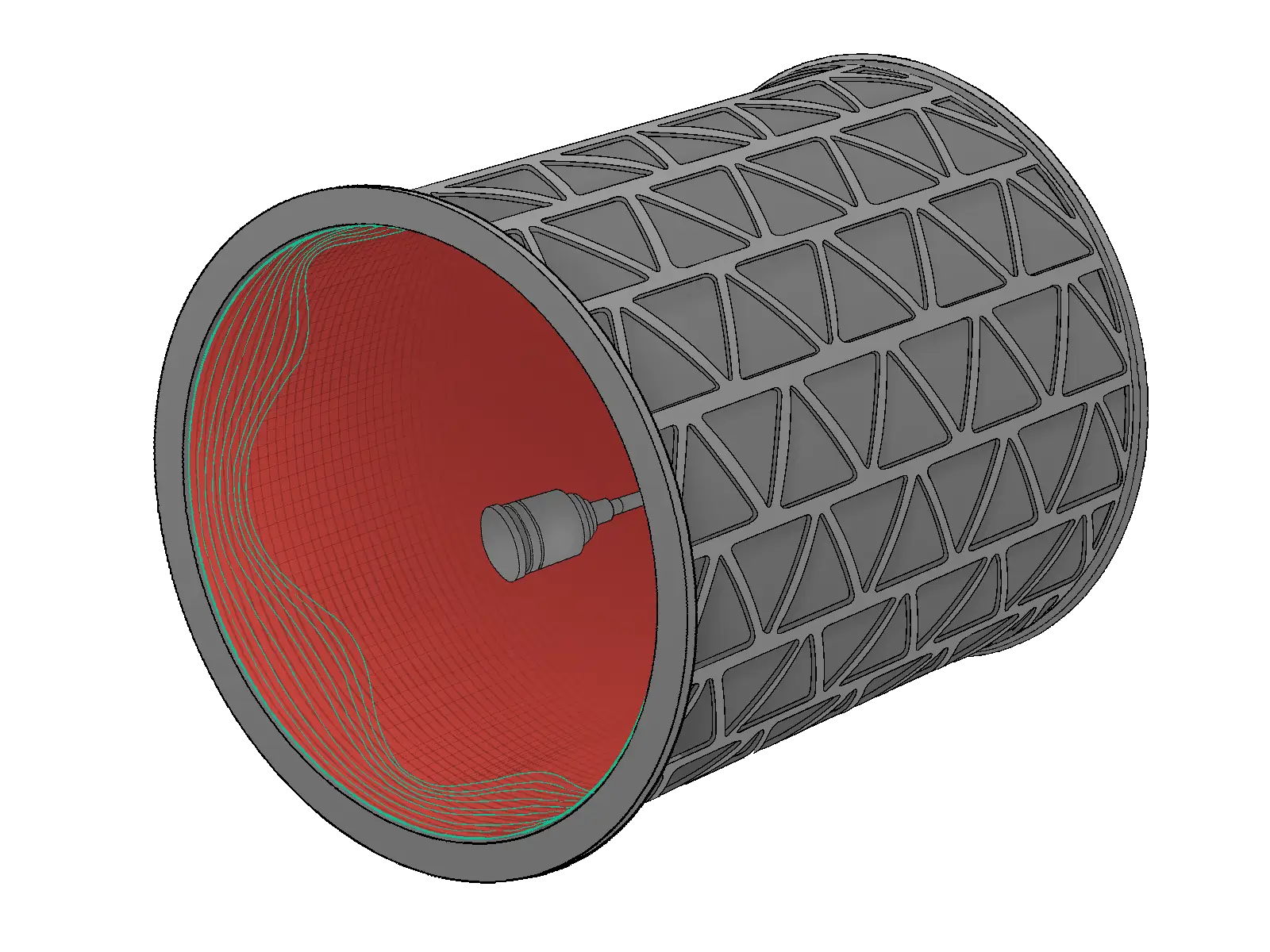
As-cast to as-machined transitions
Structural components: ducts, housings, complex castings
Not every blending challenge involves a repair. Your team can use NCT to blend between an as-cast surface and an adjacent machined surface, eliminating the lip or step that would otherwise require a secondary hand-finishing operation.
A real example: blending a section of a duct from the as-cast exterior into a machined bore or flange face, leaving a seamless transition with no remaining lip to remove. NCT measures both surfaces and generates a toolpath that bridges them cleanly, automatically.
Cast-to-machined transitions
Duct blending
Complex casting cleanup
Housing transitions
Lip removal
Business impact
What your team gains from automated blending.
Cut repair time by up to 8x
What your team once spent a full shift doing by hand now runs in under an hour. That capacity goes back into taking on more work, not more headcount.
Same result every part
Your team gets consistent surface quality on every cycle, not the quality of whoever is at the grinder that day. Part-to-part consistency improves dramatically, reducing re-inspection and rework.
Remove exactly what needs removing
By measuring before cutting, your team removes only the excess material. No overcut into thin airfoil sections, no undercut that needs rework. Precise material removal every time.
Any engineer can set it up
Behind the scenes, blending involves complex surface mathematics. NCT handles all of it. Your engineers define the blend zone in CAM and NCT does the rest. Most teams have their first program running the same day.
Built-in quality evidence
Post-blend verification generates an inspection record of the blended surface, logged against the part serial number, ready for MRO sign-off, customer reporting, and airworthiness documentation.
Win work that requires it
Take on blending contracts, MRO programs, and surface restoration work that your shop previously had to turn down or outsource. NCT makes the capability accessible without adding specialized labor.
"
8x faster
Airfoil repair cycle time
More capacity
Ability to take on additional MRO volume
Lower costs
Reduced manual labor per repair event
Other NCTransform® capabilities